
Design, Deliver, Verify: A Quality Learning Series -- More Than a Presenter: What Effective Facilitation Really Requires
There's a common assumption that facilitating a learning experience is basically the same skill as presenting one: know the content, stand up, deliver it well. In practice, facilitation asks for something different — and considerably harder. A presenter's job is to transmit information. A facilitator's job is to create the conditions for a room full of different people to actually learn, contribute, and change as a result of being there together.
That distinction matters more than it might seem. A group's success or failure often has less to do with the quality of the content and more to do with how skillfully the person in the room reads what's happening, adapts in real time, and makes space for every voice to matter.
It starts before anyone walks in
Effective facilitation doesn't begin at the front of the room. It begins with the facilitator getting inside the curriculum before the learners do — not just knowing the content, but anticipating where this specific group will resist it, where their prior experience will speed things up or slow things down, and where the design assumptions about "the learner" might not match the people actually in the room. A curriculum built in isolation can only guess at that. The facilitator's job is to close the gap between the curriculum as designed and the group as it actually shows up.
The room is the real curriculum
Once the session starts, a facilitator's core job is building an environment where people can genuinely participate — not just listen. That means actively managing group dynamics: inviting quieter voices in, keeping dominant ones from crowding out others, reading energy and engagement in real time, and adapting methods on the fly when something isn't landing. It also means being equipped to navigate conflict, disruption, and difficult moments without derailing the group's progress.
This is where facilitation and equity intersect directly. Who gets heard, whose ideas get built on, and who feels safe enough to contribute honestly are all shaped by facilitation choices — often invisibly. Skilled facilitators design deliberately for inclusion rather than assuming it will happen on its own.
Structure and creativity aren't opposites
Good facilitation depends on a clear plan — objectives, methods, timing, materials — but the plan only works if the facilitator can flex it in the moment. That might mean cutting an activity that's clearly not resonating, extending a discussion that's producing real insight, or reaching for a completely different method when the room needs something else. The best facilitators also bring creativity to that structure: varied methods, visual tools, and genuine curiosity that keep a session from feeling formulaic.
Follow-through is part of the job
Facilitation doesn't end when the session does — and follow-through means two different things, on two different sides of the room. On the facilitator's side, the curriculum was built to close a specific gap, and the facilitator is well-positioned to know whether it actually did, because they watched it happen. Identifying what worked, what didn't, and where the room's real understanding diverged from what the design assumed isn't paperwork; it's one way we find out whether the gap this curriculum was built to close is actually closed. Skip that, and even a brilliant session leaves the real question — Did it work? — unanswered.
On the learner's side, follow-through means something more practical: making sure the learning survives contact with a busy inbox and a full calendar. A session can close its gap in the moment and still fail if nothing helps that learning stick once the room empties out. The strongest facilitators build that bridge before the session ends — naming one or two concrete takeaways worth acting on, pointing toward how to apply them back on the job, and giving learners an easy way to bring what they learned back to colleagues who weren't in the room. Without it, even a session that "worked" for 90 minutes has a short shelf life.
It's a practice, not a fixed skill
The strongest facilitators treat every session as data about their own practice, not just the group's. That means reviewing what fell flat as closely as what worked, asking co-facilitators or trusted colleagues for direct feedback rather than relying only on participant evaluations, and staying honest about which new methods and tools actually serve the room versus which ones just look innovative.
Curriculum gives a session its content. Facilitation is what determines whether that content actually reaches the people it was built for. Next in this series: How to find out, with real evidence rather than assumption, whether all of this is actually working.
About the Author
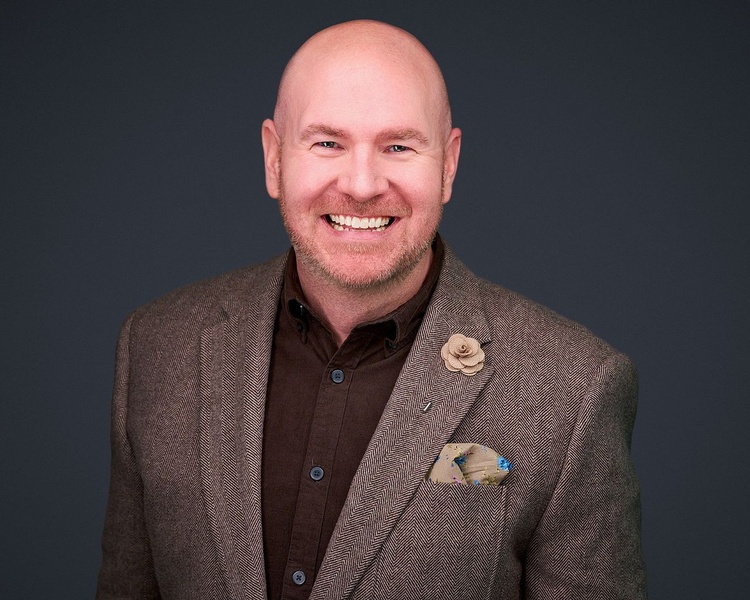
Aaron Wolowiec, FASAE, CAE, CMP Fellow, is founder and president of Event Garde, where he and his team have partnered with more than 150 associations and mission-driven organizations on facilitation, strategic planning, learning design, and event strategy — from curriculum development to multi-track conference education. A certified Technology of Participation (ToP) facilitator and mentor trainer, Aaron co-created FACILIT8me, a certificate course and community of practice dedicated to elevating the craft of facilitation.