
Making Continuing Education More Visible and Connected: Strengthening Transparency for a Changing Ecosystem

For years, continuing education and credentialing programs have been central to how professionals acquire new skills and demonstrate competence. What has changed, quickly and decisively, is the environment in which these programs operate. Employers are relying more heavily on skills data, learners are navigating a wider array of education and training options, and funders are asking for clearer documentation of quality. In this environment, programs that are easy to find, easy to understand, and easy to verify have a distinct advantage.
That expectation is no longer limited to traditional credentialing bodies. Continuing education and training (CE/T) providers, too, are being pulled into larger workforce and data ecosystems. As a result, the idea of “transparency” now carries a broader meaning: not only communicating what a program offers, but structuring information so it can be understood by people and by systems that match training with occupational needs, connect credentials to learner records, and confirm eligibility for emerging funding sources such as 529 plans.
This shift presents a significant opportunity for CE/T providers who want to expand their reach and strengthen trust with learners and employers.
Why Transparency Matters in Today’s Landscape
CE/T programs have always been expected to publish clear information about objectives, methods, credits, quality, and qualifications. Standards such as the IACET Standard, ISO/IEC 17024 for personnel certification, and NCCA guidelines all reinforce those expectations.
What is new is the push toward discoverability and interoperability—the idea that program information should be structured so that it can be located, compared, consumed, and interpreted by a variety of tools, platforms, and registries. This matters because:
Learners are navigating crowded marketplaces. Many rely on search platforms, employer portals, or advisory systems to identify reputable educational options. Programs that surface cleanly—through metadata, tags, and standardized descriptions—are more likely to be found.
Employers are increasingly skills-driven. Hiring systems use structured data to identify whether a course or certification truly aligns with an occupational requirement. Clear learning outcomes and transparent assessment descriptions make it easier for employers to understand the value of training.
Funders are demanding more clarity. With changes allowing certain continuing education expenses to be paid from 529 education savings plans, programs must demonstrate purpose, rigor, and documentation. Transparency smooths the path for verification and reimbursement.
Workforce partners are connecting systems. Registries like Credential Engine, Learning and Employment Records (LERs), and federal resources such as the Department of Defense’s COOL (Credentialing Opportunities On-Line) rely on consistent metadata and shared taxonomies. Programs that align with these structures gain visibility among employers, transitioning military service members, and state workforce agencies.
Transparency, in other words, is becoming an essential part of program design—not an afterthought.
The Role of Digital Credentials and CTDL Metadata
Digital credentials are often associated with badges and microlearning, but their real value lies in the metadata they carry. A well-designed digital credential can embed:
- What a credential is (certificate, certification, badge, degree)
- What it prepares someone to do
- What skills or competencies are represented
- The assessments or evidence required
- Renewal or recertification rules
- Cost and duration
- Quality assurance or accreditation status
- Related occupations or industries
When this data follows the Credential Transparency Description Language (CTDL), it becomes easier for external systems to recognize and interpret. CTDL functions like a shared vocabulary. It allows programs to describe themselves in a consistent way, and it allows registries, employers, and LER platforms to compare offerings and match them to career paths or workforce needs using a machine-readable method.
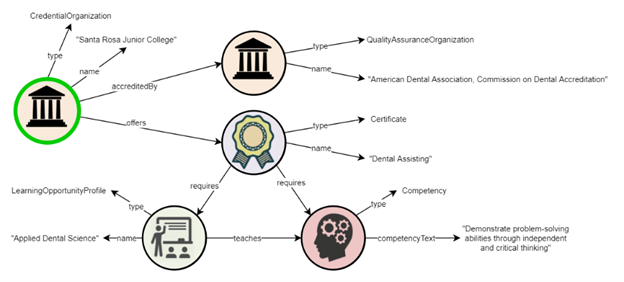
Figure 1 CTDL Resource Framework (Image © Credential Engine, used under CC BY 4.0.)
This is the same principle behind Credentialing Opportunities On-Line (COOL), a set of official U.S. Department of Defense portals (one for each service branch) that link occupational codes and credential metadata to help military personnel identify civilian credentials that align with their experience. CE/T programs that adopt common taxonomies—such as System and Organization Control (SOC) or Occupational Information Network (O*NET) codes—can participate in similar ecosystems, even if they are not part of COOL itself.
Practical Steps for CE/T Providers
Many organizations are already doing pieces of this work; the goal is to bring them together into a coherent transparency strategy.
Audit what the public sees:
Identify where program descriptions lack clarity or consistency. Are learning outcomes explicit? Are prerequisites and intended audiences stated plainly? Are CEUs calculated and explained?
Update program descriptions using structured fields:
CTDL-aligned fields offer a helpful model, even if you do not yet publish to a registry. These include: program purpose, competencies, assessments, duration, cost, and quality assurance measures.
Consider issuing digital records:
Platforms that support Open Badges 2.0 allow you to embed structured metadata that travels with the learner. These credentials can be shared on LinkedIn, uploaded to LERs, or verified by employers.
Map programs to workforce taxonomies:
Even a simple notation—such as the SOC code for the occupation the course supports—helps external systems understand relevance.
Communicate intentionally:
Develop learner-friendly and employer-friendly explanations of what a credential represents, how it is earned, and how it supports career progression or funding eligibility.
Recommended: Publish your formal programs to the Credential Registry, a free cloud-based repository that hosts metadata about all types of credentials in an accessible format that lets people explore competencies, learning outcomes, up-to-date market values, and career pathways.
Strengthening CE’s Role in Workforce Development
As workforce systems evolve, continuing education is playing a more visible role in helping individuals keep pace with changing job demands. Transparent, well-structured program information ensures that CE/T providers not only meet standards but also contribute meaningfully to the broader learning and employment ecosystem.
By embracing digital credentials, structured metadata, and alignment with common taxonomies, CE/T providers can increase trust, expand reach, and make it easier for learners to access and fund high-quality training. In a landscape where agility and clarity matter, transparency is becoming one of the most powerful tools available.
About the Author

Joshua R. Goldman, MA, CAE, CTA, has more than 20 years of experience in continuing education and credentialing and serves as a consultant and instructor with CredUp Hub. He works with credentialing bodies and associations to strengthen program quality, transparency, and workforce relevance by aligning programs to standards and practices across learning and employment ecosystems. josh@creduphub.com www.creduphub.com